
Lack of urchin
Fossil-hunting fun near Cromer
I had a lovely couple of days in North Norfolk last month, enjoying the Deep History Coast in the excellent company of six visitors from the US. At West Runton, everyone wanted a mammoth. Or a rhino tooth. Or some hyaena poo. I wouldn’t have said no to any of these, but the creatures I craved were Cretaceous. If I didn’t find at least one I would have been, by ‘eck, annoyed.
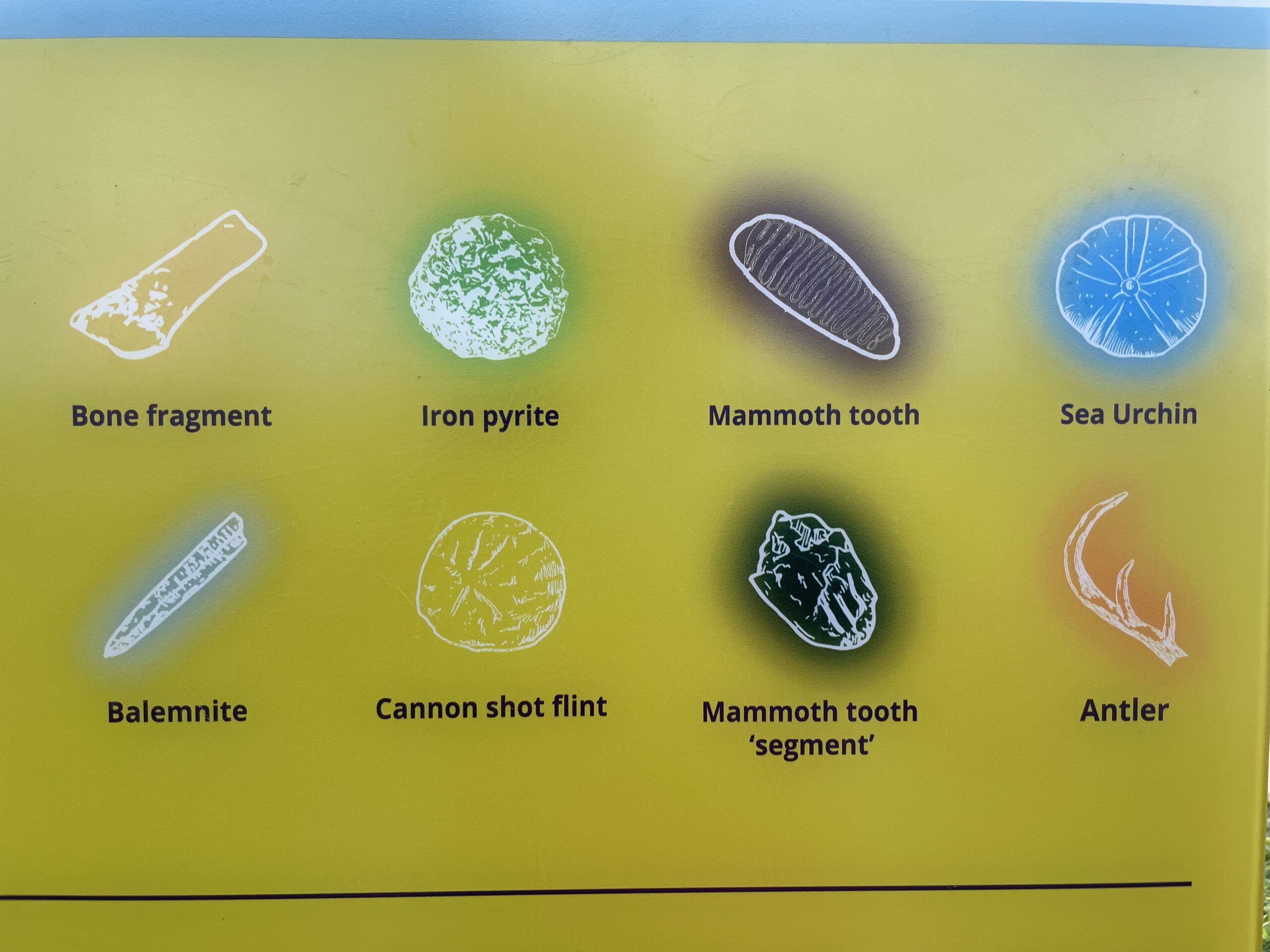
By the end of the first afternoon, however, despite much patient picking through the shingle, I’d only found a few bits of belemnite. Lovely though they are – translucently peachy with a frosted surface, like a special seaside sweet – they were not the droids I was looking for. Perhaps East Runton on day two would be more fruitful?
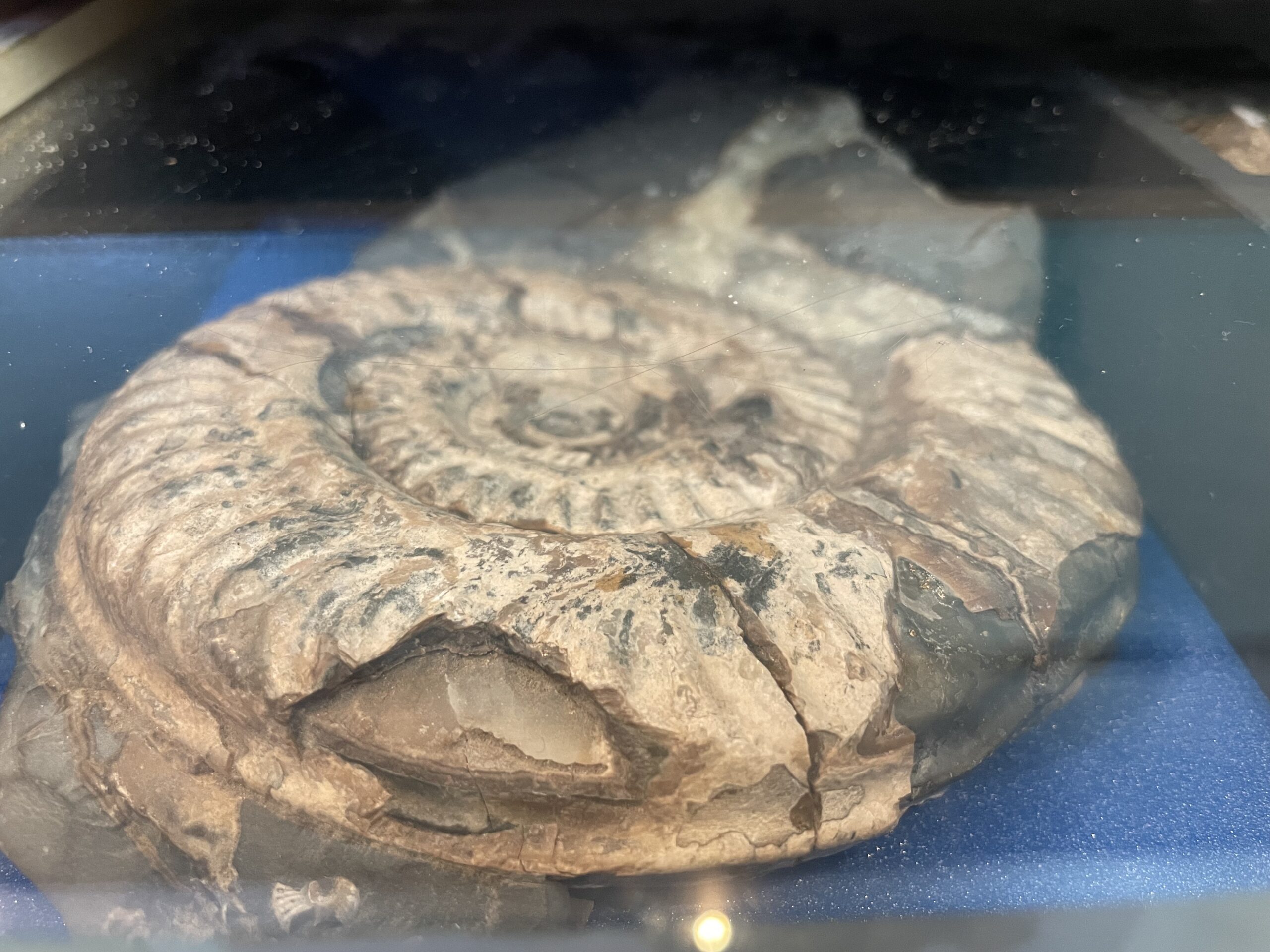
With low tide in the late afternoon I visited Cromer Museum in the morning. It’s a great little place, full of fab local fossils, a fair few of which aren’t local.
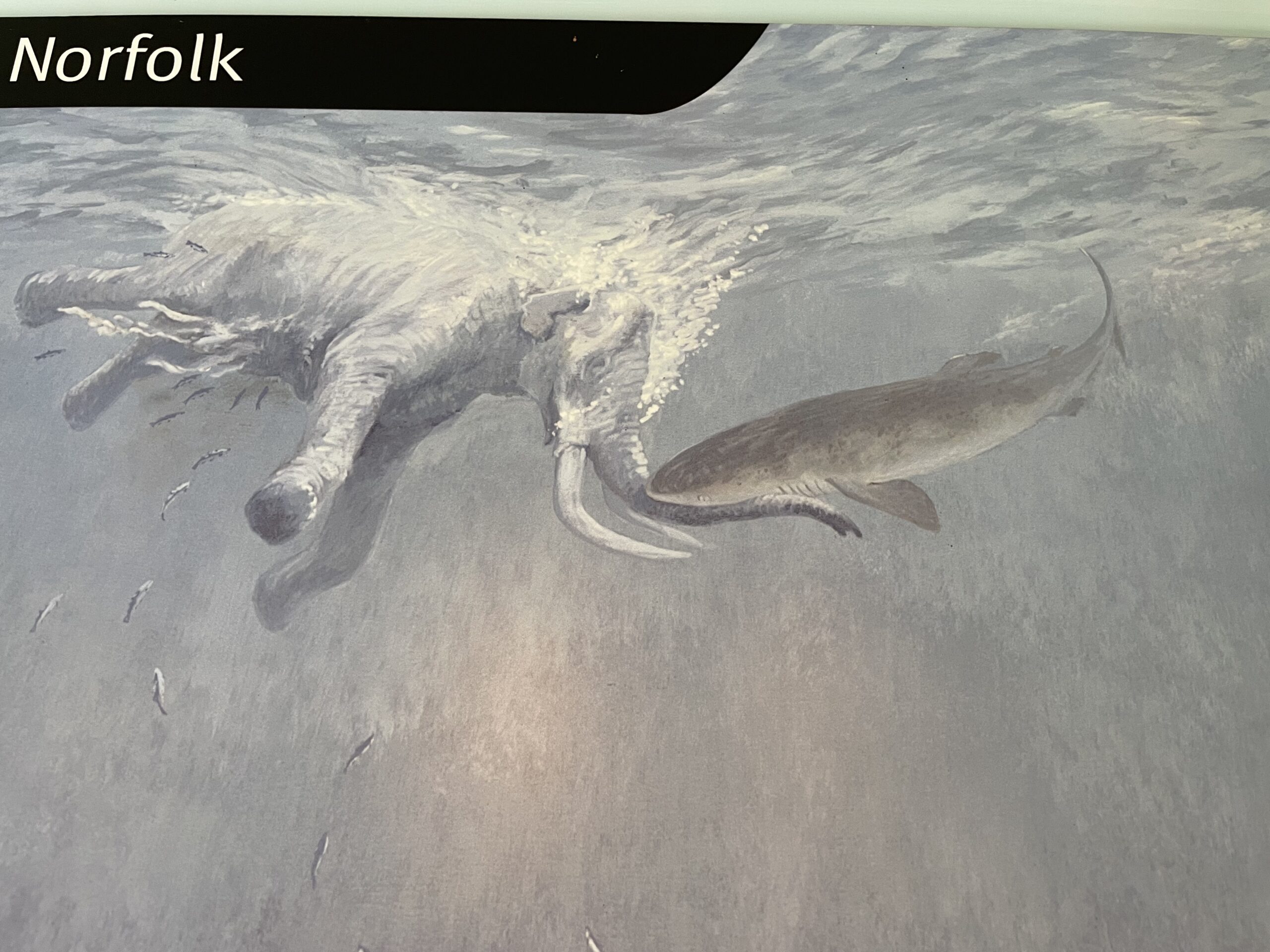
I also enjoyed the mural of Pleistocene Norfolk, showing a Greenland shark scavenging the bloated, floating carcass of an elephant.
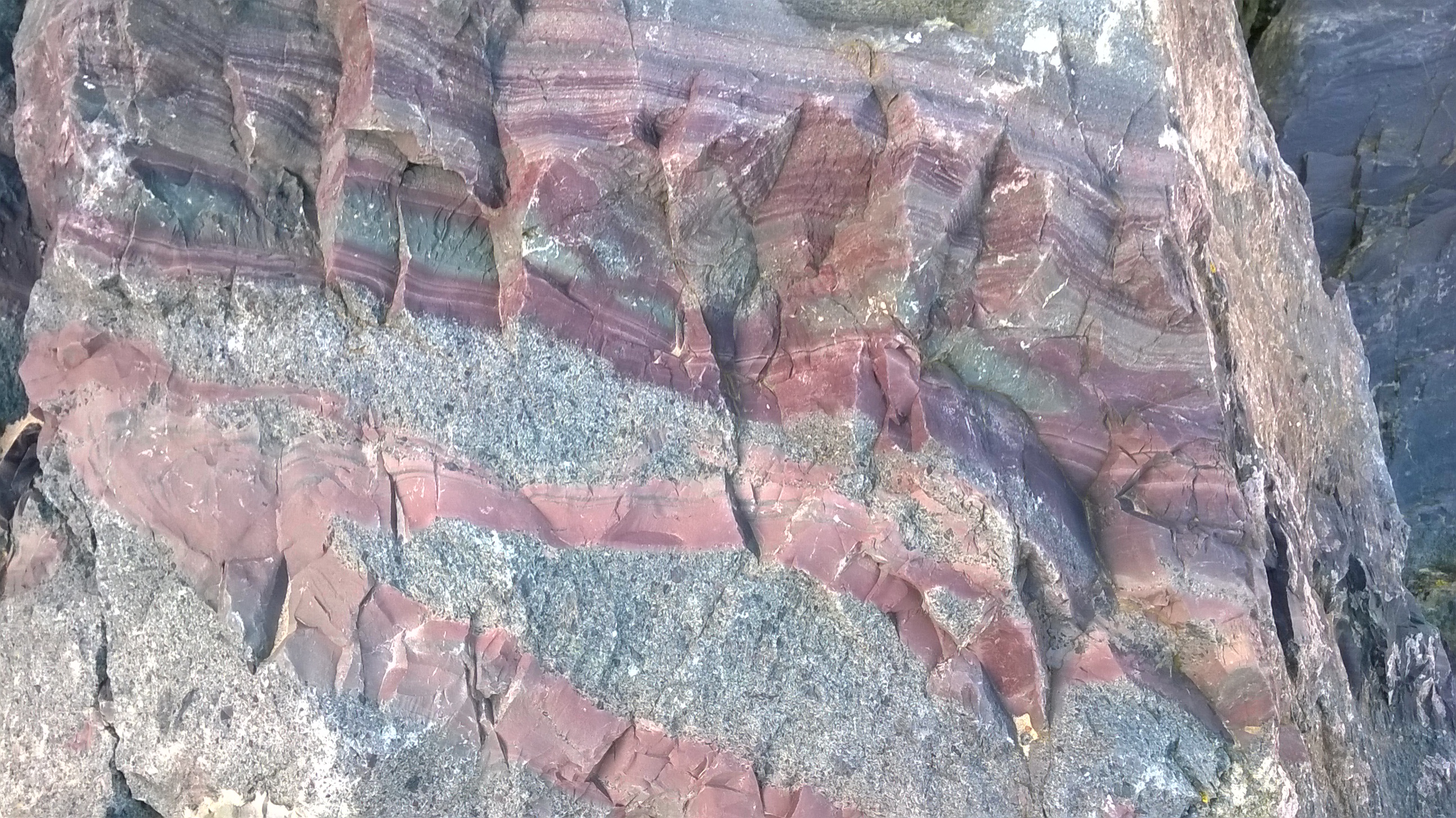
Elsewhere in the museum there was a fascinating exhibition about the pioneering photographer Olive Edis and a new display about Alfred Savin and the fossil-collectors of Cromer. Lucy on the museum desk was super-helpful too, and I headed back out into the wind-chilled sunshine with a spring in my step. East Runton beach was brisk and beautiful, and after admiring some Precambrian volcanic boulders (see the Northfolk Project for more details) I got stuck back into flint-flipping.
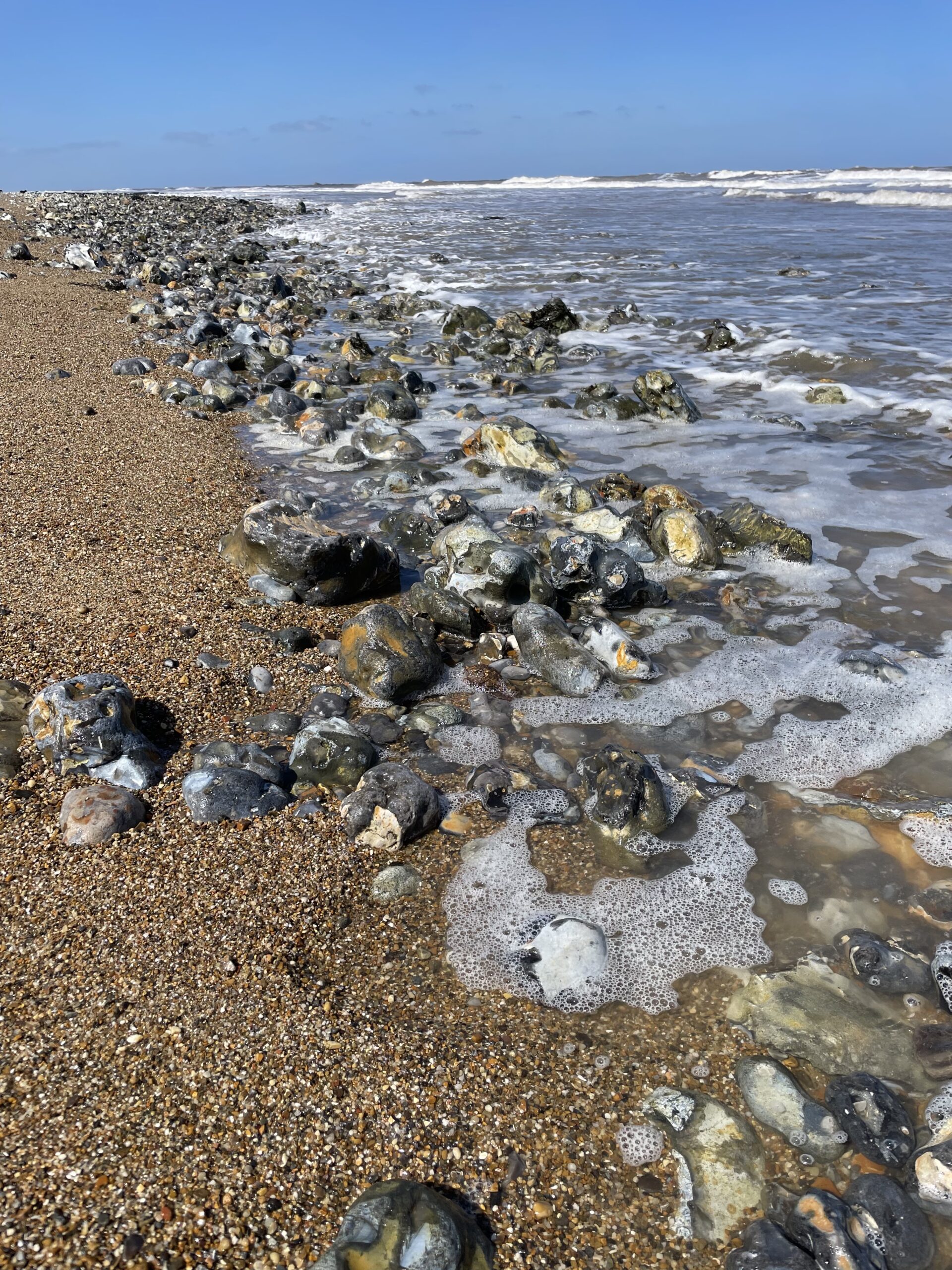
This is probably the juncture at which to state that flint can be flipping infuriating. Every pebble is fossil, and almost none are. The silica that formed the flints came from sponge spicules and plankton and it often crystallized inside burrow structures, or sponges, or empty shells in the Chalk sea floor. And chalk itself is formed of limy plankton and broken-up shells. The Cretaceous bedrock of North Norfolk couldn’t be much more biogenic if it tried.
So does that mean that Cretaceous body fossils are plentiful in the flint? No it does not! The best thing you can say about most of the cobbles is ‘might have been a burrow’ or ‘perhaps a sponge’. Unless you’re populating The Museum of Hard Knobbly Tube-rocks you won’t collect much, though you might find yourself reworking the lyrics to a Madonna classic.
Lack of urchin
Searched for a very long time
Lack of urchins
Place your tube-feet next to mine.
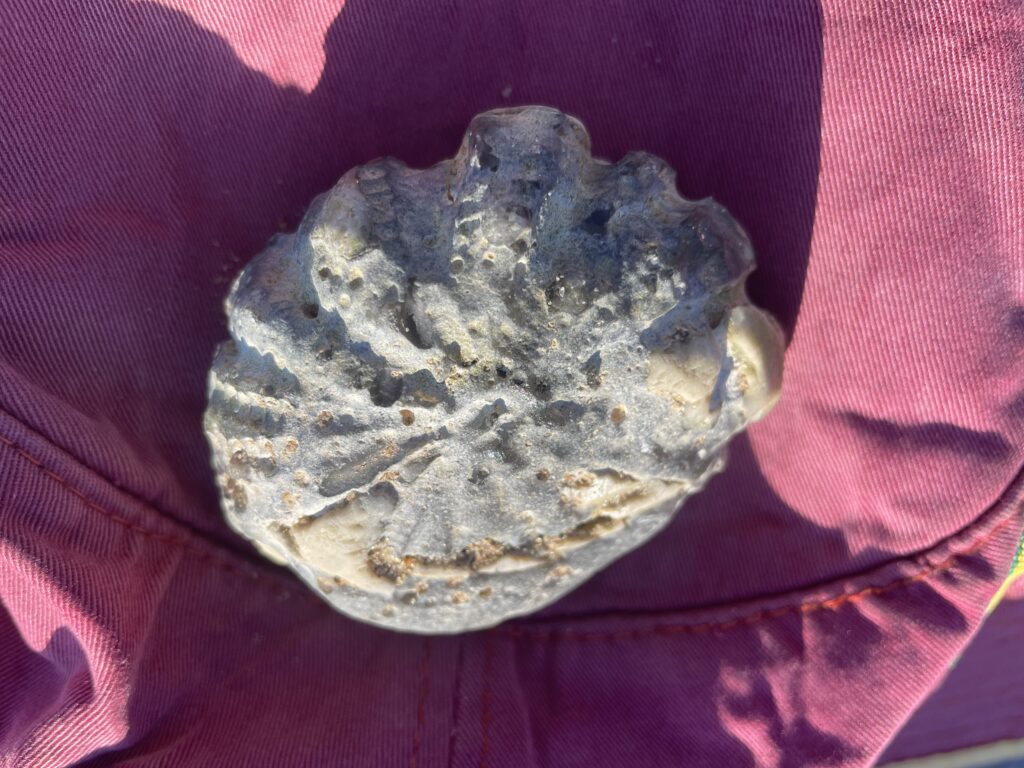
But then, suddenly, after hours of patient pebble-picking, you might be richly rewarded. With the tide having turned, teatime fast-approaching, and exasperation becoming despondency, there it was! The treasure I’d been sea-urchin’ for! A pitted pentameral paperweight of a thing, wedged into a rock pool.
I almost yelped with joy, holding it aloft like the World Cup, the spring returning to my step as I dashed across the ankle-twisting beach to show the others.
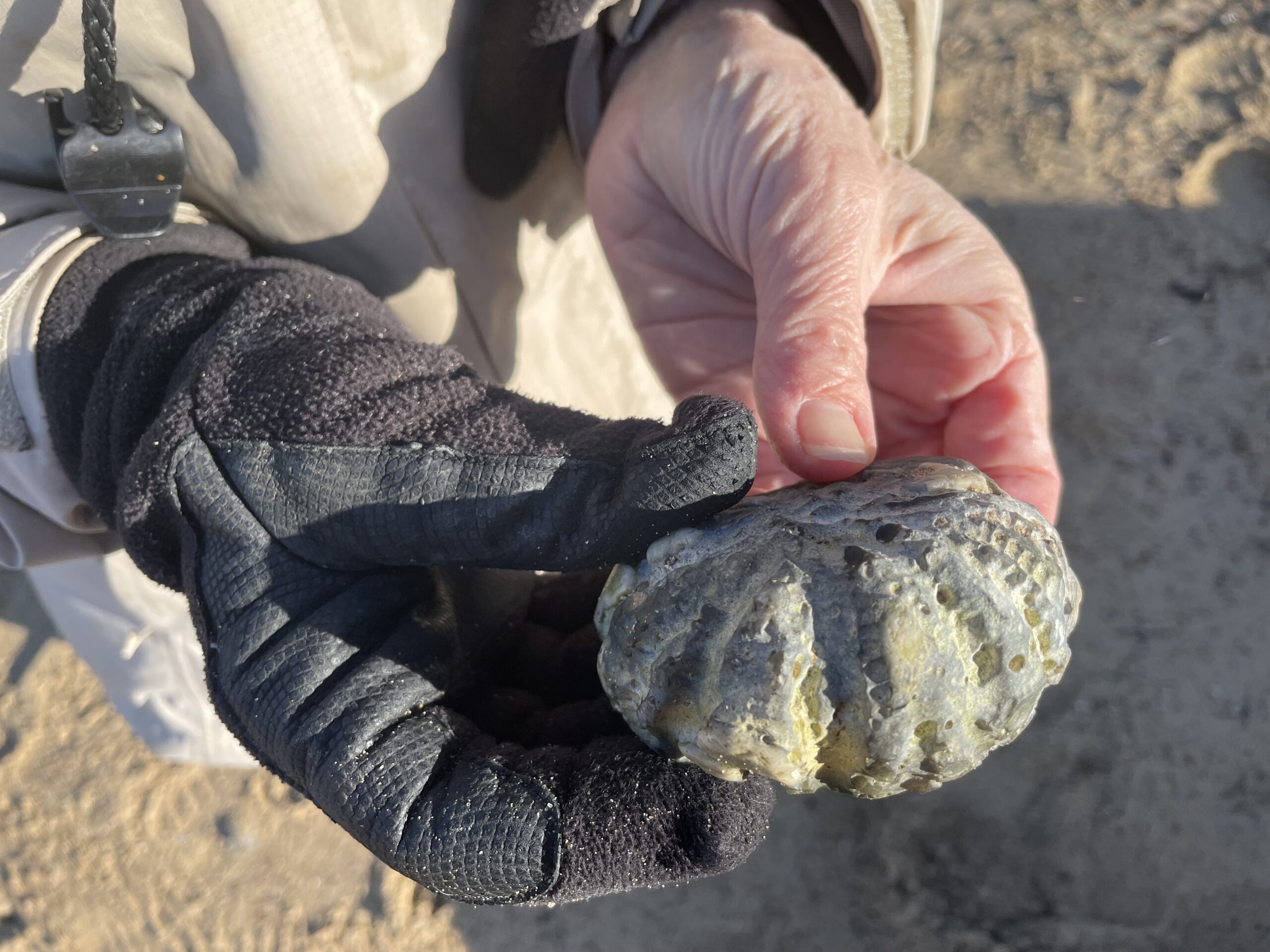
Now all I need to do is work out which species of Chalk echinoid it is…
Further reading:
Exploring Norfolk’s Deep History Coast – Davies & Waterhouse (2023)
The Northfolk Project – Field Guide to the Deep History Coast
ChaSE – the Chalk Seas Ecosystems project




1 Response